

- March 26, 2026
- Water Damage Restoration
How Long Does Water Damage Take to Dry in Gold Coast & Brisbane?
Water damage restoration in Brisbane often begins with one important question: how long will it take for the affected areas to dry? While the answer varies from one property to another, understanding realistic drying timeframes helps homeowners and businesses plan repairs and reduce uncertainty. In Brisbane and the Gold Coast, water damage can occur due to heavy rainfall, plumbing failures, appliance leaks, or roof issues. Although standing water may be removed quickly, drying the structure properly takes time and careful management. This article explains what influences drying time and why a structured restoration approach matters.
These estimates assume controlled drying conditions. Factors such as delayed response, extensive saturation, or high humidity can extend these timeframes. Water damage restoration in Brisbane relies on ongoing assessment rather than fixed deadlines to confirm when drying is complete.
Understanding Water Damage in Brisbane and the Gold Coast
Water damage occurs when unwanted water enters a building and affects materials such as flooring, walls, ceilings, and fixed furnishings. In Southeast Queensland, weather events such as storms and prolonged rainfall are common contributors. Internal issues, including leaking pipes, overflowing fixtures, or appliance malfunctions, also frequently lead to water exposure inside properties. Once water enters a building, it does not remain confined to one visible area. Moisture can travel through porous materials and spread beneath floors, into wall cavities, and around structural components. This movement often happens out of sight, which makes water damage more complex than it initially appears. Another important consideration is timing. The longer moisture remains in building materials, the more challenging the drying process becomes. Early action helps limit the spread of moisture, but even prompt response does not eliminate the need for controlled drying. Water damage restoration in Brisbane properties focuses on stabilising the internal environment so materials can dry safely and evenly.What Affects Water Damage Drying Time?
Drying time depends on a combination of factors rather than a single cause. Each property responds differently based on its construction, layout, and exposure level.Source and Type of Water
The origin of the water influences how restoration is approached. Clean water from internal plumbing issues generally requires a more straightforward drying process. In contrast, water from storms or external sources may involve additional handling considerations due to contamination risks. Although the drying principles remain similar, situations involving contaminated water often require more thorough cleaning and monitoring, which can extend the overall timeline. This does not mean drying is slower by default, but it does require careful management throughout the process.Materials and Surfaces Affected
Building materials respond differently to moisture exposure. Some materials absorb water quickly and release it slowly, while others resist absorption but allow water to pool underneath. For example:- Carpet and underlay can hold moisture deep within layers, even when the surface feels dry.
- Timber flooring may absorb water unevenly, leading to longer drying times.
- Gyprock and insulation can trap moisture inside walls, which is not visible without assessment.
Environmental Conditions
Environmental conditions play a significant role in drying speed. High humidity, which is common in Brisbane and the Gold Coast, slows evaporation. Without active moisture control, natural drying can take considerably longer. Airflow, temperature, and humidity work together during the drying process. Controlled airflow helps move moisture away from surfaces, while dehumidification reduces moisture in the air so wet materials can release trapped water more effectively. These conditions are adjusted throughout water damage restoration in Brisbane properties to support steady drying progress.Typical Water Damage Drying Timeframes
While every situation is different, general timeframes help set realistic expectations when drying is managed correctly.| Area or Material | Approximate Drying Time |
| Hard surface flooring | 24 to 48 hours |
| Carpet and underlay | 2 to 4 days |
| Timber flooring | 3 to 7 days |
| Wall cavities and insulation | 3 to 5 days |
| Overall structural drying | 3 to 7 days |
Why Water Damage Restoration in Brisbane Is Important
Removing visible water is only the first step after water damage. Moisture often remains in areas that are not immediately accessible. If this moisture is not managed properly, it may continue to affect materials long after the initial incident. Water damage restoration focuses on:- Safe extraction of excess water
- Controlled drying using appropriate methods
- Monitoring moisture levels throughout the process
- Reducing the risk of further material damage
Drying Methods Used During Water Damage Restoration
Drying is an active process that combines equipment, monitoring, and adjustment over time.Air Movement
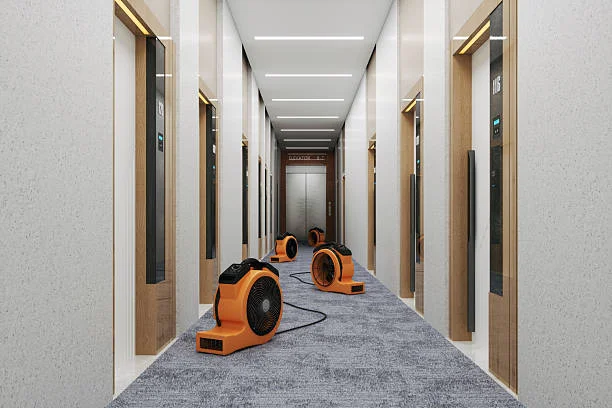
Air movers increase airflow across damp surfaces and within affected spaces. This airflow supports evaporation and helps prevent moisture from settling in stagnant areas. Equipment placement is adjusted as drying progresses to maintain consistent airflow.Dehumidification
Dehumidifiers remove excess moisture from the air. In humid climates, this step is essential to prevent moisture from re-entering materials that are already drying. Lower humidity levels allow damp materials to release water more efficiently.Moisture Monitoring
Moisture readings are taken at different stages of the drying process. These readings help track progress and confirm whether materials are drying evenly. Monitoring also helps determine when drying is complete and when repairs can begin safely.Risks Associated With Incomplete Drying
Incomplete drying can create long-term issues, even if a property appears dry on the surface. Residual moisture may remain trapped inside materials or structural spaces, leading to problems that develop gradually. Potential risks include:- Ongoing damage to flooring, walls, or cabinetry
- Warping or deterioration of building materials
- Persistent damp or musty odours
- Delays to repair or reinstatement work
- Increased likelihood of mould development
Residential and Commercial Drying Differences
Residential and commercial properties present different drying challenges due to layout and usage. Residential properties often involve:- Carpeted living areas
- Timber or laminate flooring
- Enclosed wall cavities
- Large open-plan areas
- Multiple flooring types
- Operational requirements during drying